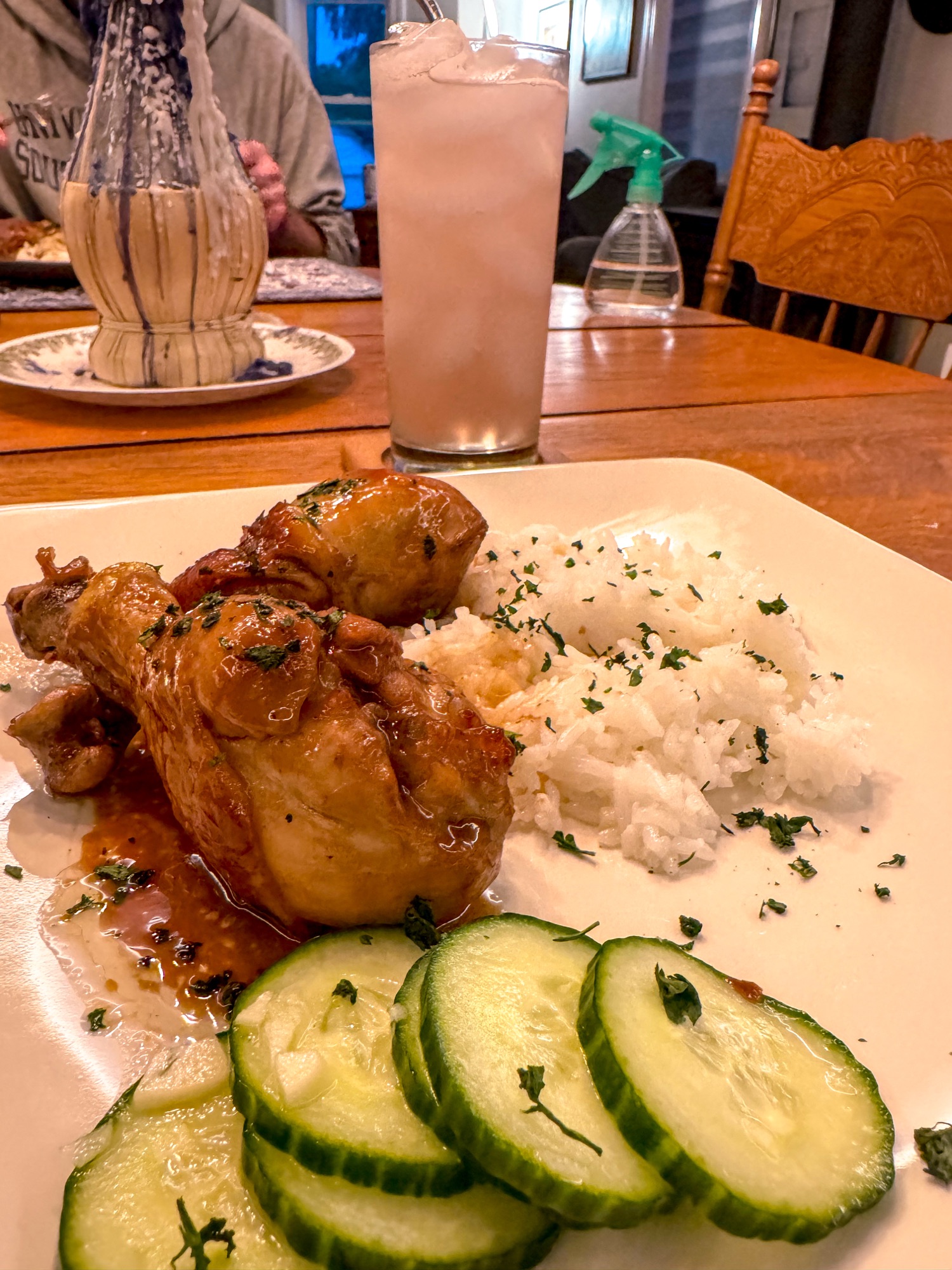
Welcome back to Cooking Around the World: Monthly Recipe Challenge, where each month I explore the food, flavors, and traditions of a different country. For October, we’re heading to the Philippines! Filipino cuisine is full of bold flavors, comforting dishes, and fascinating cultural influences. This month, I wanted to make something hearty enough for a cool fall evening but different from the meals I typically cook at home. After a little research, I settled on Filipino Chicken Adobo.
Chicken adobo is one of the Philippines’ most recognizable dishes, and it’s easy to understand why. Chicken simmers in a savory, tangy sauce made with soy sauce, vinegar, garlic, bay leaves, and black pepper until tender and flavorful. The ingredients are simple, but together they create a dish that is anything but ordinary. One of the things I love about this recipe is that you don’t need a long list of specialty ingredients or complicated cooking techniques. A handful of pantry staples, some chicken, and a pot of rice are all you need to create a satisfying meal.
This Month’s Recipe: Filipino Chicken Adobo
Chicken adobo is a delicious meal that delivers plenty of flavor without requiring much hands on work. The chicken slowly simmers in a mixture of vinegar, soy sauce, garlic, and spices before the sauce is reduced to concentrate its savory, tangy flavor.
Serve it over garlic fried rice or white rice to soak up every bit of that delicious sauce.
I used a Milk Street recipe that I tweaked a bit.
Filipino Chicken Adobo
Ingredients
- 3 to 3½ pounds bone-in, skin-on chicken thighs or drumsticks
- ¾ cup soy sauce
- 1 ½ cups Filipino cane vinegar, rice vinegar, or distilled white vinegar
- 1 cup water
- 8 garlic cloves, lightly crushed
- 3 serrano chilies, halved lengthwise
- 4 bay leaves
- 1 teaspoon whole black peppercorns
- 1 cup unsweetened coconut milk (optional)
- 1 tablespoon brown sugar
- ⅓ cup chopped fresh cilantro
White rice or fried garlic rice for serving
Instructions
- In a large bowl combine the vinegar, soy sauce, garlic, chilies, bay leaves and peppercorns. Add the chicken thighs, submerging them. Cover and refrigerate for 30 minutes or overnight. I ended up using a Pyrex baking dish so everything fit.
- Transfer chicken and marinade to a large Dutch oven or braising pan. Bring the mixture to a boil over medium-high. Reduce to medium-low and cook, turning the chicken pieces occasionally, until the chicken registers 170ºF, 30 to 45 minutes, adjusting the heat as necessary to maintain a medium simmer.
- When your chicken seems done, heat the broiler with an oven rack 6 inches from the element. Line a rimmed baking sheet with foil. Remove the chicken from the pot and arrange skin side up on the baking sheet. Broil the chicken until the skin is deeply browned and blackened in spots, 3 to 8 minutes. Remove from oven and cover with foil.
- Meanwhile, strain the cooking liquid, discarding the solids and return the liquid to the pot. Stir in the coconut milk (if using), brown sugar and bring to a simmer over medium. You want to cook it down by about half.
- Once the liquid has reduced and has thickened up a bit, add the chicken back in. Turning it to coat with the sauce.
- Serve with rice and pickled cucumbers and a sprinkle of cilantro. Be sure to ladle some extra sauce on your chicken, it’s so tasty.
What to Serve With It
Try serving it with:
- White rice
- Garlic fried rice
- Atchara- A traditional Filipino pickled green papaya salad that adds a bright, tangy crunch.
- Simple Asian pickled cucumbers
- Bok Choy- Quick-sautéed or flash-boiled greens tossed with garlic.
Tips for Making Chicken Adobo
- Choose the right vinegar. Filipino cane vinegar is a great option if you can find it. Rice vinegar or distilled white vinegar can also work, although their acidity and flavor differ.
- Don’t rush the cooking. A gentle simmer helps the chicken become tender without drying out.
- Reduce the sauce at the end. This concentrates the flavor and creates a richer finish.
- Make it ahead. The flavors can develop overnight in the refrigerator. Reheat gently, adding a splash of water if the sauce becomes too concentrated.
Filipino Garlic Fried Rice (Sinangag)
Garlic fried rice is a delicious accompaniment to chicken adobo. The toasted garlic adds wonderful aroma, while the rice soaks up the savory sauce from the chicken. Sinangag is especially associated with Filipino breakfasts, but it also makes a wonderful side dish for dinner.
Filipino Garlic Fried Rice
Ingredients
- 4 cups cooked, chilled rice
- 5–6 garlic cloves, finely minced
- 2 tablespoons neutral cooking oil
- Salt, to taste
- Sliced scallions, optional
Instructions
- Heat the oil in a large skillet over medium-low heat.
- Add the minced garlic and cook gently, stirring frequently, until fragrant and pale golden. Be careful not to burn it.
- Add the cooked rice, breaking up any clumps.
- Stir-fry for 4–6 minutes, until the rice is heated through and the garlic is evenly distributed.
- Season lightly with salt and garnish with scallions if desired.
Cooking tip: Chilled leftover rice works particularly well because it tends to be less sticky. Refrigerate leftover rice promptly and reheat it thoroughly before serving.


Beverage Pairings
Beer: A crisp lager pairs well with the garlic and savory sauce without overwhelming the flavors of the chicken. It’s a straightforward choice for a relaxed dinner.
Wine: A dry or slightly off-dry Riesling is worth considering. Its acidity works nicely with the vinegar in the adobo, while its fruity character complements the savory sauce.
Cocktail: Gin Pomelo (also called Gin Pom) is a classic Filipino cocktail that blends the botanical notes of gin with the sweet‑tart flavor of fresh pomelo juice, making it light, refreshing, and easy to prepare.
Nonalcoholic: For something less sweet, serve sparkling water with a squeeze of fresh lime. It’s refreshing and helps balance the richness of the meal.


A Little Background on Filipino Cuisine
The Philippines is an archipelago in Southeast Asia with a rich and diverse food culture. Its cuisine reflects centuries of trade, migration, and cultural exchange, bringing together indigenous traditions and influences from Chinese, Spanish, and other culinary cultures.
Filipino food varies considerably from one region to another. Some dishes are sweet and tangy, others are savory and deeply comforting, and many balance several flavors in a single meal. Rice is a staple in many households and is often served alongside meat, seafood, vegetables, and flavorful sauces.
Chicken adobo is among the best known Filipino dishes. The word adobo is associated with a method of seasoning and cooking food, and Filipino adobo has developed its own distinctive identity. Vinegar, garlic, and seasonings are central to many versions, while soy sauce is common in modern recipes. There isn’t one definitive recipe for adobo. Some families prefer a tangier sauce, others use more soy sauce, and some brown the chicken before braising it. Recipes are often passed down through generations and adapted to personal tastes.
That’s part of what makes this dish such an interesting choice for our monthly challenge. It’s a wonderful introduction to Filipino home cooking, with plenty of room for individual variation.


Cooking Along This Year
One of my favorite parts of this year’s challenge has been discovering just how different each country’s approach to food can be. From the rich stews of France to the spices of Turkey and the comforting flavors of Germany, every month has given me something new to try in my own kitchen.
And that’s really what this series is all about: stepping outside our usual routines, exploring new flavors, and finding inspiration from kitchens around the world.
With another destination checked off the list, I’m already looking forward to seeing where next month’s adventure takes us. Have you tried any of the recipes from this series? I’d love to know which country or dish has caught your eye!
Until next time, happy cooking!

